

Get Rid of Pantry Pests

Pantry pests can be eliminated by a proper search for the infestation and treatment with traps and/or crack and crevice aerosols. In private residences the pantry pest such as the Indian meal moth is usually brought in products from the grocery stores. It is usually just in one area, but can spill over into other areas.
How To Get Rid Of Pantry Beetles & Weevils
Pantry Pest Control Products
Get Rid Of Clothes Moths & Carpet Beetles
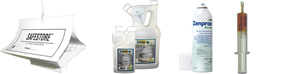
Prevention is the best option by laundering before long storage times. However if you have these fabric pests, first inspect the infestations. You should make a thorough inspection of infested premises to find all sources of infestation. After inspection, you can use a variety of treatments. We suggest a residual insecticide, an aerosol, dust or a combination.Cloth Moth larvae and Carpet Beetle larvae like to feed in hidden and secluded places. A flash ligh and small spatula may come in handy in your inspection.
1. Look for live or dead insects. Live insects may be hard to find because these pests avoid the light, hiding in the folds of the fabric or in the cracks and crevices of closets.
How To Inspect Clothes Moths & Carpet Beetles
Clothes Moths Control Products
Carpet Beetle Control Products
Pantry Moths & Pantry Beetles
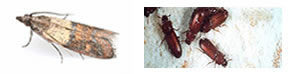
Pantry pests and pantry moths are truly "pests". These stored product pests are called pantry pests as a whole group collectively. They have an appetite for stored food products (people and pet foods) such as, flour, cereal, dry pasta, dry pet food, powdered milk, corn starch, crackers, spices, breads, bird seed, dried nuts and fruit. They become especially troublesome when these foodstuffs are stored in paper containers and these products remain unused for extended periods of time. These pests are important to the householder because they cause food waste and infestations can be persistent. There are several pantry pests such as, Rice Weevils, Granary Weevils, Grain Moths, Grain Bores, Drugstore Beetles, Tobacco Beetle, Indian Meal Moth, Confused Flour Beetle, Red Flour Beetles, etc.
Pantry pests, including pantry moths most often are brought into homes in packaged foods, although they may enter from outside sources, or from adjacent apartments. Initially, infestations are easy to overlook because the insects involved are quite small, especially the egg and larval stages.Often the first indication of the infestation is the appearance of small moths flying about or the presence of beetles in or near the food package.
Their presence in the home does not necessarily reflect on the quality of the housekeeper.
The majority of these pests are either beetles or moths. The adult stage is the most easily detected as they often leave the infested material in search of new locations, or are attracted to lights.
| Indian Meal Moths | Mediterranean Flour Moths | Drugstore Beetles |
| Flour Beetles | Sawtooth Grain Beetles | Cigarette Beetles |
| Merchant Grain Beetles |
Clothes Moths & Carpet Beetles
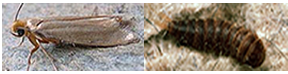
The most prevalent fabric and textile destroying insects in the U.S.A. include, the Webbing Clothes Moth, Casemaking Clothes Moth, Black Carpet Beetle, Varied Carpet Beetle, and Furniture Carpet Beetle. Fabric-destroying insects cause much damage each year by eating vulnerable fabrics. Materials which are readily infested include sweaters, coats, upholstery, piano felts, blankets and any other woolen products. Furs, hair, leathers and hides, feathers, horns, insect and animal collections and such stored foods as meat, fish, meal and milk products are also vulnerable to these insects.
Fabric pests are a pest nuisance because of their ability to digest and utilize keratin as an energy source. Keratin is the chief protein constituent of such human tissues as hair, fingernails and skin. In other mammals, keratin is the chief structural protein in horns, hoofs, and feathers. Keratin is a protein which is quite stable chemically and is very resistant to most means of digestion. Few animals are able to digest keratin, and these include only a relatively small number of insects. This peculiar ability to digest keratin, coupled with our widespread use of wool and other animal hair, is the basis of fabric pest problems in our societies. Other pest, such as silverfish, crickets,cockroaches and earwigs will chew or shred the fabric, but not digest it. The ability to digest the keratin and the abundant use of wool and other animal hair is the cause of such a widespread problem
| Casemaking Clothes Moths | Webbing Clothes Moths | Black Carpet Beetles |
| Furniture Carpet Beetles | Varied Carpet Beetles |