

Get Rid Of Clothes Mothes
Get Rid of Carpet Beetles
The group of insects known as fabric pests includes silverfish, clothes moths and carpet beetles. Except for silverfish, the main food sought by fabric pests is a protein substance called Keratin present in fibres of animal origin such as wool, and even human hair.
Silverfish prefer substances of plant origin such as cotton cellulose and starch.
Clothes Moths or Pantry Pests?
Fabric pests like clothes moths are sometimes confused with pantry pest moths. They are close in size and appearance. Many times an infestation can start in a grain or meal product, but cloth moths will travel to your closet areas to infest the preferred source of woolens, ect.
Pantry moths will stay in the pantry areas. Check corners, under furniture that has not been moved for a long time, behind baseboards, etc.
Why Fabric Pest Eat Clothes
Fabric-destroying insects cause much damage each year by eating vulnerable fabrics. Materials which are readily infested, include sweaters, coats, upholstery, piano felts, blankets and any other woolen products. Furs, hair, leathers and hides, feathers, horns, insect and animal collections and such stored foods as meat, fish, meal and milk products are also vulnerable to these insects. Synthetic fibers and cellulose materials are damaged only incidentally, often because they are soiled with greasy food stains, body oils, or other residues which are the primary object of the insect attack. Fabric pests are a pest nuisance because of their ability to digest and utilize keratin as an energy source. Keratin is the chief protein constituent of such human tissues as hair, fingernails and skin. In other mammals, keratin is the chief structural protein in horns, hoofs, and feathers. Keratin is a protein which is quite stable chemically and is very resistant to most means of digestion. Few animals are able to digest keratin, and these include only a relatively small number of insects. This peculiar ability to digest keratin, coupled with our widespread use of wool and other animal hair, is the basis of fabric pest problems in our societies.
Inspection
A complete inspection is necessary before beginning any control measures.
It is important to remember that adults do not cause the damage, but the larvae do. The presence of adults in an area, doesn't mean that larvae are nearby, in that they may have laid their eggs in another room, and adults are randomly moving around. Carpet beetle larvae tend to wander, so consider additional sites.
Guidelines To Inspect For Cloth Moth and Carpet Beetle Infestations.
How to Get Rid Of Carpet Beetles & Clothes Moths
Inspection
A complete inspection of the closets and other areas is the first order of business. The soiled garments, particularly woolens, silks and linens need to be dry cleaned or laundered.
Vacuum and Clean
After the inspection, critical areas should receive the special attention by cleaning and vacuuming. The insecticides will kill exposed adults and larvae; the concern would be hidden eggs and larvae.
In carpets, clean and vacuum around the cracks and crevices of baseboards. In furniture, vacuum and clean around the buttons, zippers and seams.
Clothes Moth Control
Clothes Moth Traps
Taking clothes to the dry cleaning, laundering, vaucuuming and cleaning are the primary ways of getting rid of cloth moths.
Webbing Clothes Moths
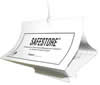
Excellent pheromone traps for webbing clothes moths are :
Safestore Clothes Moth Trap, Propest Clothes Moth Trap or Clothes Moth Alert traps with pheromones to attract the adult male webbing cloth moths. We like the Propest Clothes Moth trap because the pheromone lure is impregnated in the glue, making it ready to use.
Please make sure that they are webbing cloth moths traps before using. These traps will only trap the webbing clothes moths, not the casemaking clothes moths. The webbing clothes moth is the most common clothes moth. This pheromone trap has a sex hormone to attract the male webbing clothes moths. Use these traps in closets or areas where the clothes are stored. If you do catch clothes moths, always follow up with dry cleaning, vacuuming and cleaning.
Casemaking Clothes Moths
For casemaking clothes moths, use the Safestore Casemaking Clothes Moth Trap
Webbing Clothes Moths and Casemaking Clothes Moths
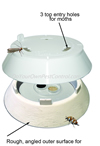 The X Lure Fabric Trap will trap both the Webbing Clothes Moths and the Casemaking Clothes Moths. This reusable trap is also effective against Varied and Black Carpet Beetles.
Chemical Treatments for Clothes Moths
Aerosols : You can use an aerosol like Bedlam Plus or Temprid Ready Spray, with its crack and crevice tips if you wish a chemical treatment. For most control, the inspection and cleaning is the most critical for successful elimination of clothes moths.
Insecticide Concentrates: D-Fense SC would be a good insecticide for spot or crack and crevice treatments. It is odorless and it has a broad label to use against other common household insects.
Carpet Beetle Control
Chemical Treatments For Carpet Beetles
Infested rugs, carpets, and furniture should be cleaned thoroughly and protected with a residual insecticide application.
Use Aerosols: An aerosol with a crack and crevice tip would be recommended after cleaning and vacuuming. Spray the cracks and crevices of infested areas. We recommend Zenprox Aerosol.
Zenprox Aerosol is a reduced risk, botanical insecticide in an aerosol form. It is also a non-repellent, the carpet beetles do not know it is present. Zenprox can be used for other insects.
Use of Insecticide Concentrates: A residual insecticide concentrate such as D-Fense SC would be a good choice for spot treatments or spraying broader areas. D-Fense is a great all around insecticide and odorless.
Insect Growth Regulators: It is not our recommendation to use insect growth regulators( IGR's), like Gentrol IGR, because it extends the larvae stage of the carpet beetle. The larvae stage is what does all the damage.
Always keep pets and children off the wet surface until it dries.
Occasional Dusting: Dusting can be messy, but can get into the cracks and crevices. If you did dust , use CimeXa Dust with a hand duster like a Bellow Duster.
Prevent Clothes Moths and Carpet Beetles
Prevention is the best control.
A thorough vacuum cleaning of rugs and furniture removes lint and pet hair as well as some of the larvae.
Stored clothing should be kept in tightly closed containers.
Temperature Control
Sensitive items, such as museum pieces, wall mountings, furs, taxidermy
mounts, etc., might require vaults fumigation or treatment with temperature
control.
Major pest control companies do have chambers for this type of control.
 All Pantry Control Products